CALC.fiscalquarter(date, startMonth [,startDay,timeZone])
For a fiscal calendar defined by an arbitrary start date, returns the fiscal quarter corresponding to the specified date as a number, e.g., “4”. The startMonth and optional startDay determine the starting point of the fiscal year.
If the start of the fiscal year is on the 29th, 30th, or 31st day of a month, the actual last day of the month is used as the month boundary. For example, if you specify March 31 as the start of the fiscal year, this designates March 31 as the first day of month 1. However, the first day of month 2 cannot be April 31 because April has only 30 days. Therefore, the start of month 2 is the actual last day of the month, April 30.
Parameters
- date
-
Date object to be converted to fiscal quarter.
- startMonth
-
Integer specifying the starting month of the fiscal calendar.
- startDay
-
Integer specifying the starting day of the fiscal calendar (defaults to 1).
- timeZone
-
Time zone for fiscal year start date, a valid time zone identifier (e.g.,
"GMT","GMT-8","America/New_York"). Default is the JVM system default time zone.
Example
//Today’s quarter in fiscal year beginning April 16:
CALC.fiscalquarter(CALC.today(), 4, 16)
To reference data when scripting a Data Worksheet Expression Column or Dashboard Calculated Field, use the field syntax. Example:
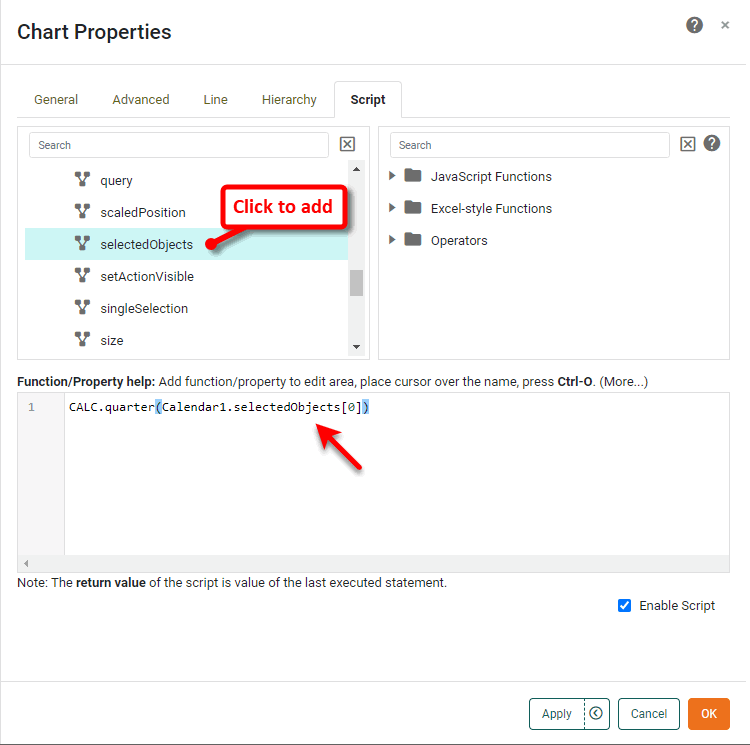
CALC.fiscalquarter(field['Order Date'], 4, 16)To reference data in Dashboard global script, component script, or property script, use keywords such as value, selectedObjects, data, table, or parameter. Example:
CALC.fiscalquarter(RangeSlider1.selectedObjects[0], 4, 16)
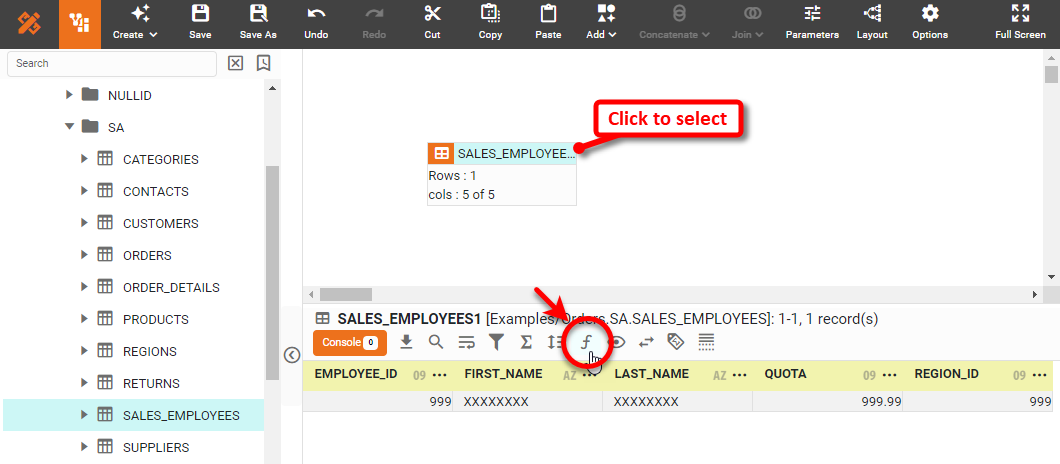
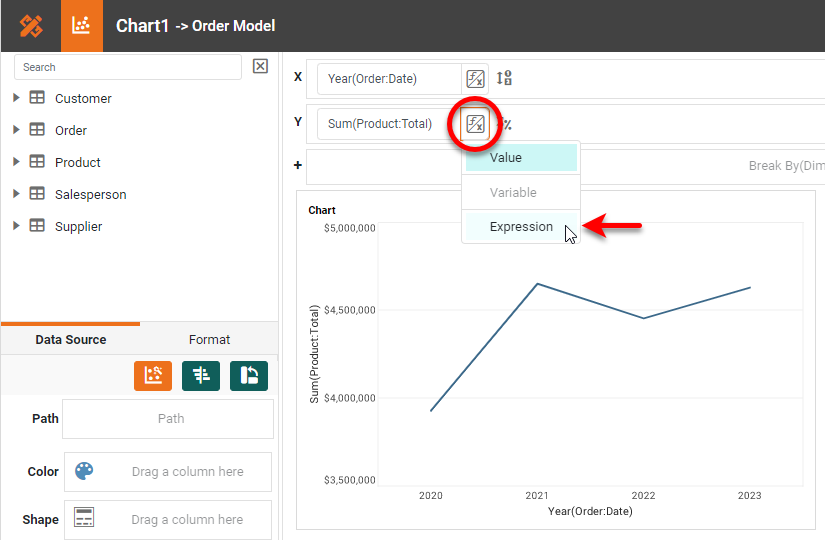
How to access data in Data Worksheet Expression Columns…To create an expression column in a Data Worksheet, press the ‘Create Expression’ button
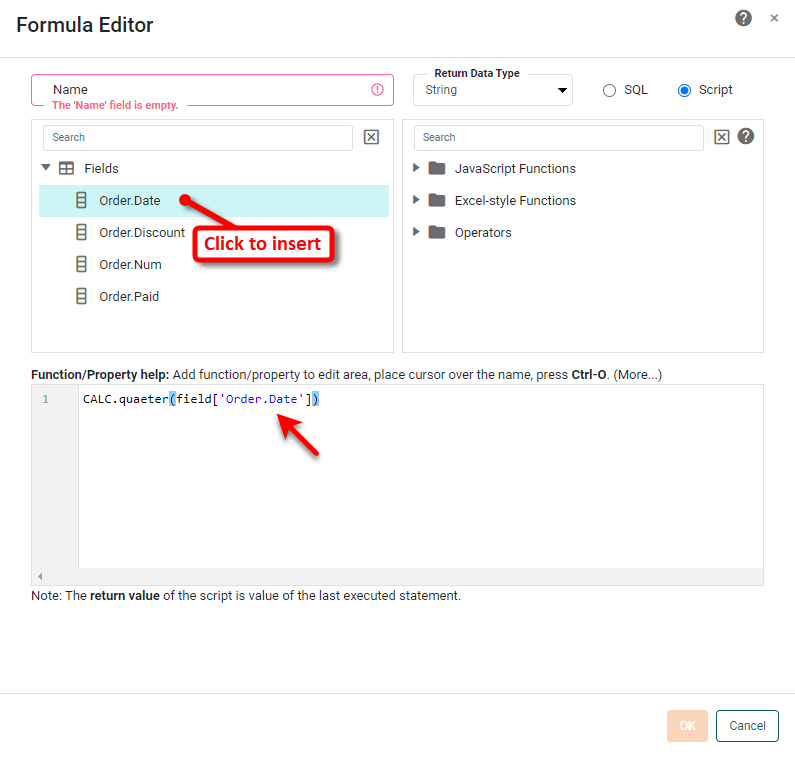
Insert fields (and parameters) into the script by clicking the items in the tree. Example syntax:
To reference the data contained in other cells of the data block, see the topics below: Example 1. Cell Referencing
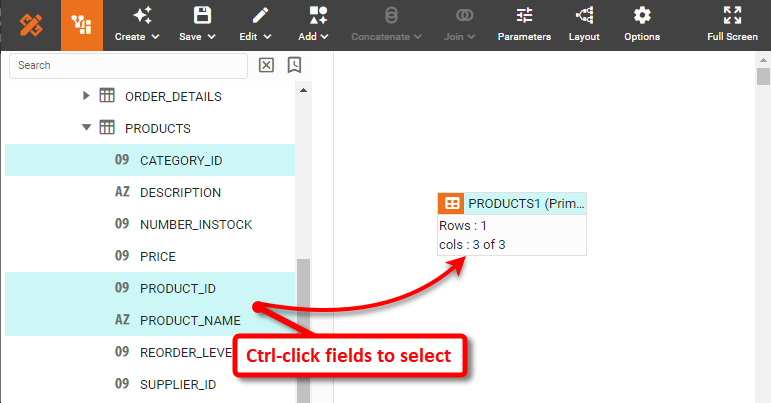
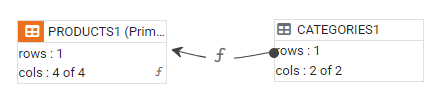
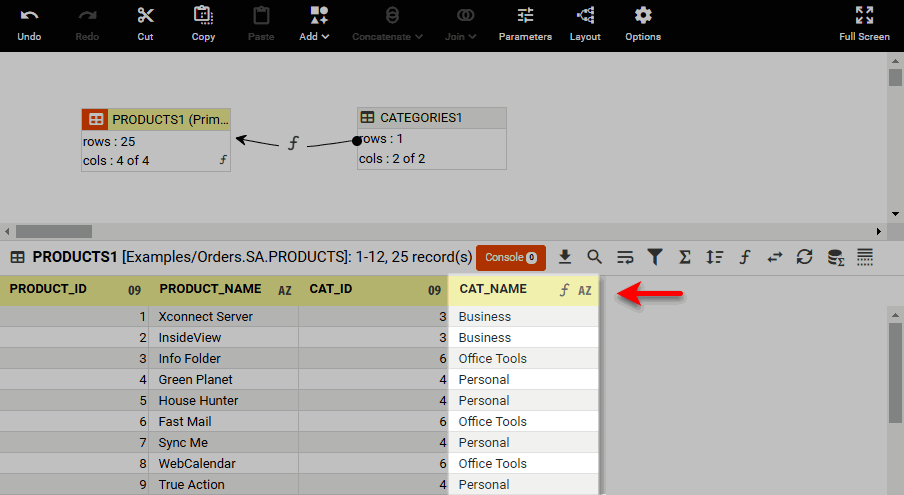
This example illustrates how you can reference the cells of another data block from within an Expression Column. You will use the tables in the folder of the ‘Orders’ data source to create a data block that has columns for product ID, product name, category ID, and category name.
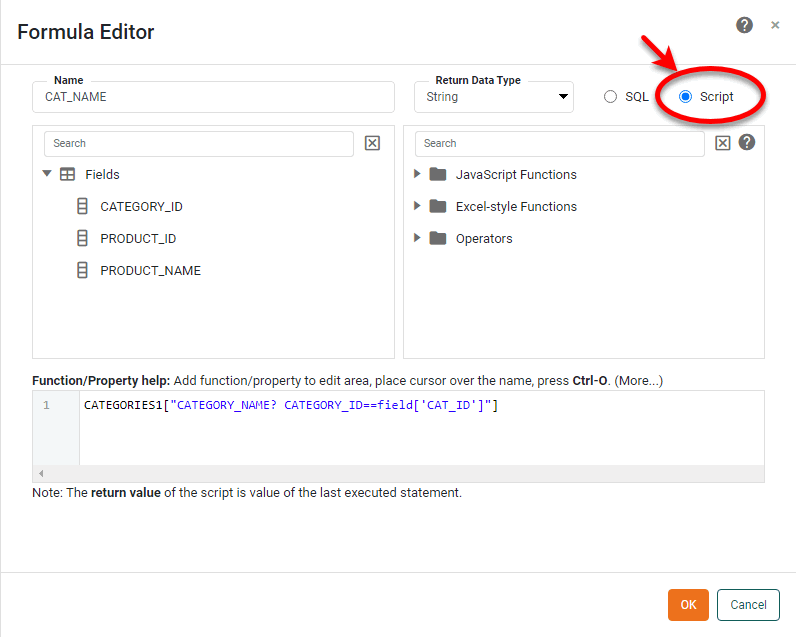
Let’s say that you want to add a column to the ‘PRODUCTS1’ data block that will contain the category name corresponding to each entry in the ‘CAT_ID’ column. The best way to do this is to join the data blocks together (see Join Data), but to practice using cell references, in this case you will create this new column as an expression column. Follow the steps below:
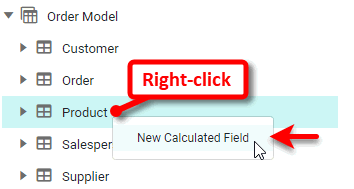
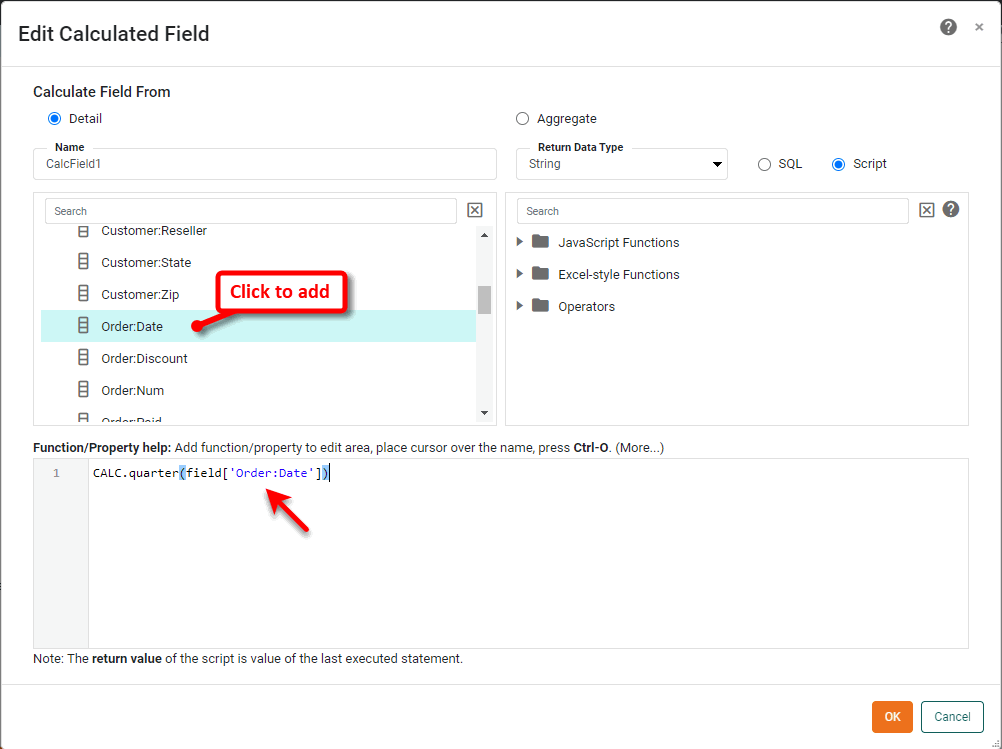
How to access data in Dashboard Calculated Fields…To create a calculated field in a dashboard, right-click on the data block, data model, or query to which you want to add the calculated field, and select ‘New Calculated Field’. (See Create a New Data Field for more details.)
Insert fields (and parameters and component properties) into the script by clicking the items in the tree. Example syntax:
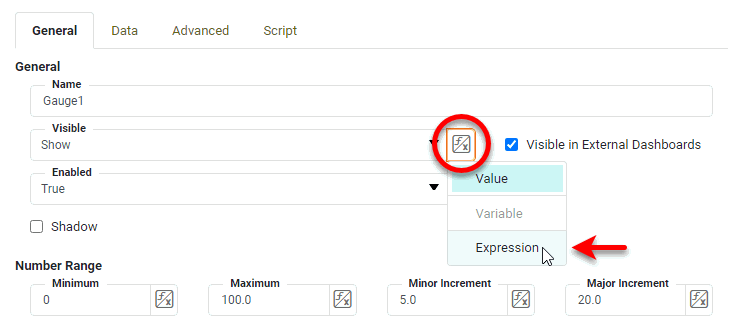
How to access data in Dashboard Property Expressions…To set a Dashboard property value using an expression, press the ‘Value Type’ button
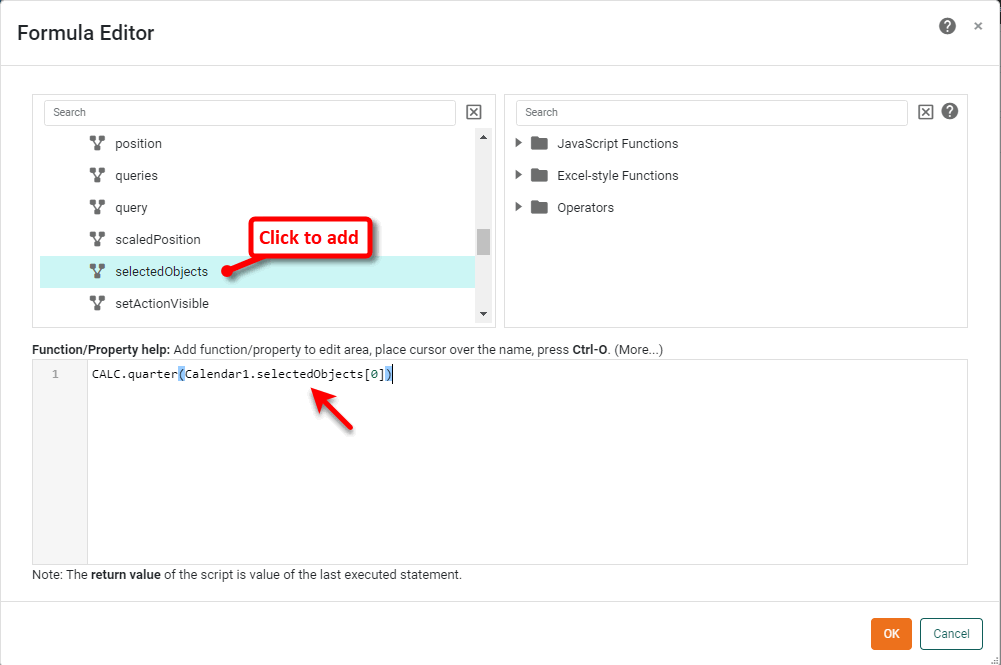
To insert a reference a component’s data, use the value, selectedObjects, data, or table property of the component. Example syntax:
See Dashboard Object Reference for information about accessing dashboard settings and data in script.
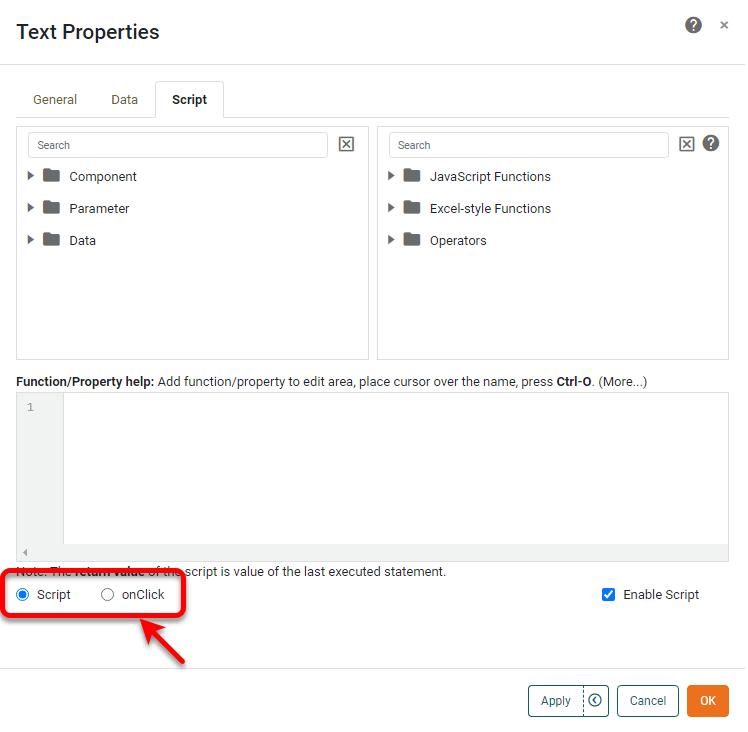
How to access data in Dashboard Scripts…To add script to a Dashboard component, right-click the desired component, and select ‘Properties’ from the context menu to open the ‘Properties’ panel. Note: You can also access menu options from the ‘More’ button (
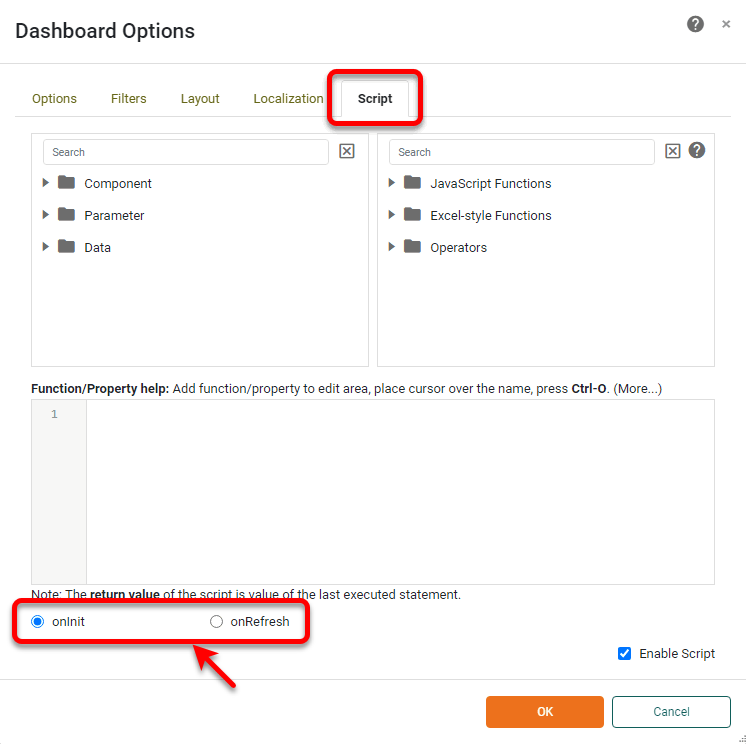
To add global script to a Dashboard, press ‘Options’ button
To insert a reference a component’s data, use the value, selectedObjects, data, or table property of the component. Example syntax:
See Dashboard Object Reference for information about accessing dashboard settings and data in script. |