Interval Chart
An Interval chart is similar to a Bar Chart but represents two measures with each bar: A smaller value that defines the bottom of the bar, and a larger value that defines the size of the bar. (Note that the second measure specifies the vertical span of the bar, and not the upper value of the bar.)
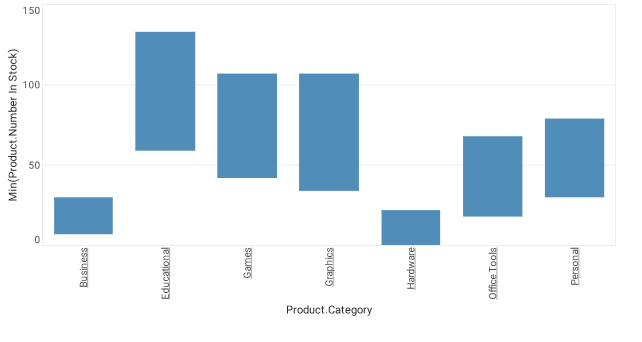
To create an interval chart, follow the basic steps below:
|
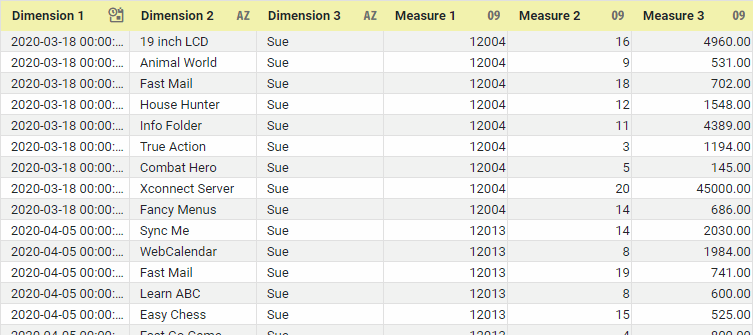
If you are new to charting, see the following sections first: Configure Your Data…The data source for the chart (data block or data model) should represent dimensions and measures as independent columns or fields, as shown below. See Prepare Your Data for information on how to manipulate your data, if it is not currently in this form. (Note: A properly designed data model will already have the correct structure.)
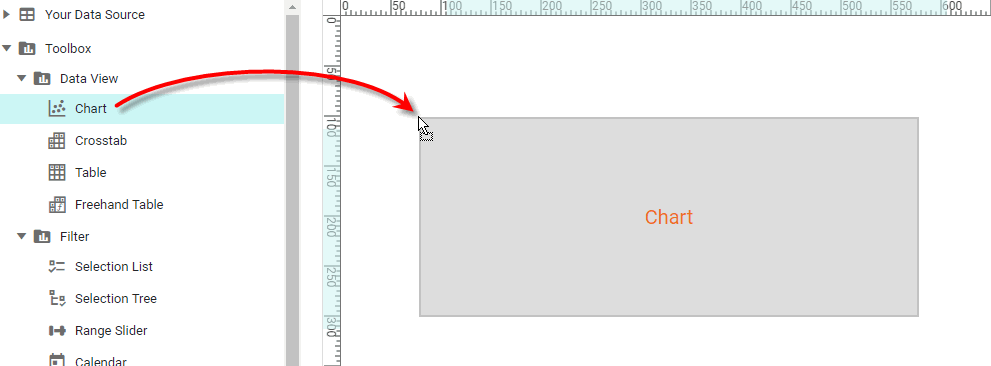
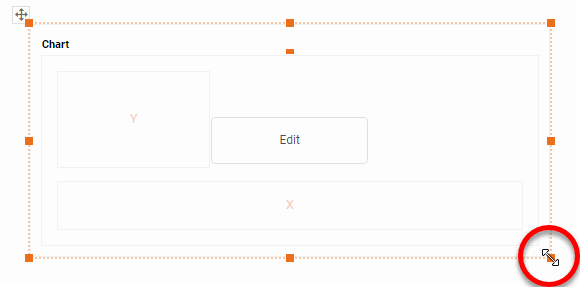
In some cases (e.g., Pie Chart), you may want your data to provide just a single measure. In other cases (e.g., Line Chart), you may want the data to supply multiple measures. If the data does not provide the correct number of measures, you may be able to alter the number of measures to suit the needs of the chart by “pivoting” or “unpivoting” the data. See Pivot Data in Prepare Your Data for more information about this procedure. Open a Chart for Editing…Watch Video: Create a Chart (Open the Chart Editor)This video might show an earlier version of the feature or operation that differs in minor ways from the current version. Follow the steps below to get started with a new Chart. See Basic Charting Steps for more details.
|

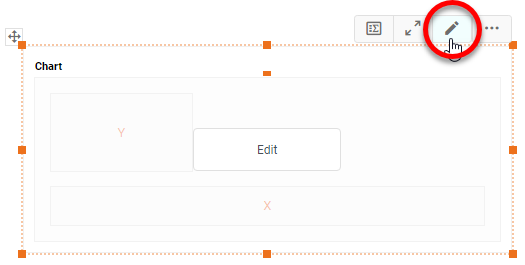
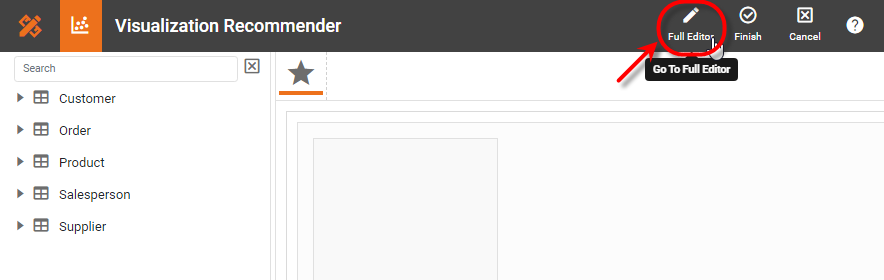
-
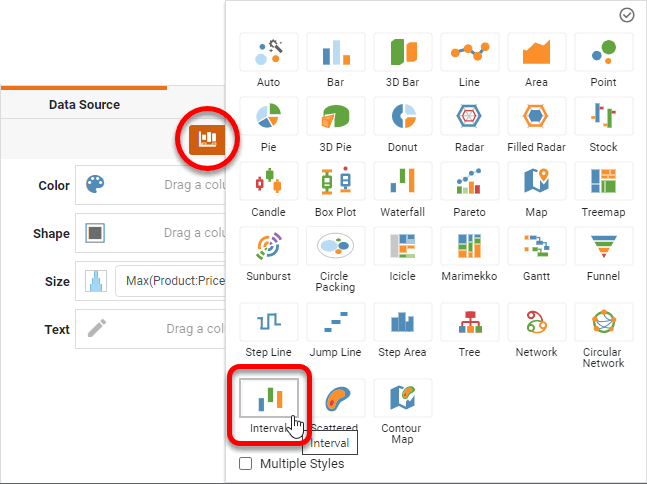
Press the ‘Select Chart Style’ button
 . Choose the ‘Interval’ style. Press the ‘Apply’ button
  .
.
-
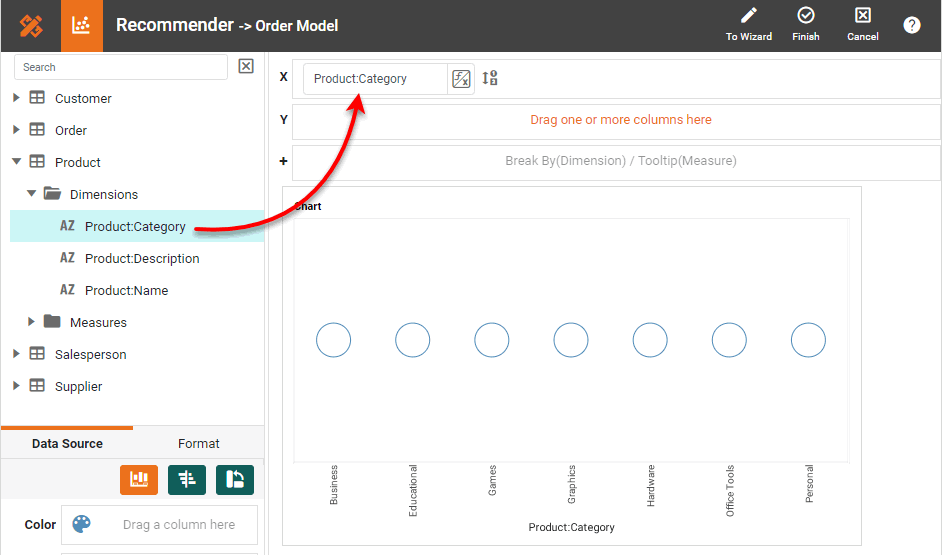
From the ‘Dimensions’ folder of the Data Source panel, drag a desired dimension to the ‘X’ region.
What is a dimension?
A dimension is used to break-down the dataset into multiple groups, often within a Crosstab, Chart, or Selection List. Adding a dimension to the ‘X’ region of a Chart distinguishes the different dimension groups by location on the X-axis. Adding a dimension to the ‘Y’ region distinguishes the different dimension groups by location on the Y-axis. You can add multiple dimensions into the ‘X’ or ‘Y’ regions of a Chart, or into the ‘Rows’ or ‘Columns’ regions of a Crosstab, to create multiple grouping levels. You can also distinguish groups in a dimension by using color, shape, size, or label in a Chart.
To convert a measure to a dimension, right-click the measure in the data source and select ‘Convert to Dimension’. -
Optional: For a date dimension, press the ‘Edit Dimension’ button
 next to the field name in the Chart Editor, and set the ‘Level’ to the desired date grouping. Then press the ‘Apply’ button .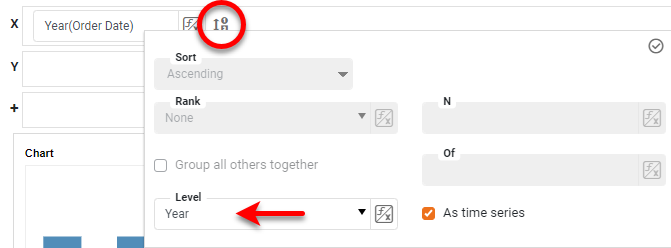
-
Optional: You can add additional dimensions to the Chart if desired. See Trellis Chart (Grid) for information about adding multiple dimensions to a chart axis. See Basic Charting Steps for information on how to add dimensions using color, shape, or size representation.
-
From the ‘Measures’ folder of the Data Source panel, drag a measure to the ‘Y’ region. This measure defines the lower value of each bar/interval on the chart.
What is a measure?
A measure is generally used for aggregation, for example summation, averaging, correlation, etc., within a Crosstab, Chart, Text component, or Gauge. Adding a measure to the ‘Y’ region in a chart displays the computed aggregates by using locations on the Y-axis. Adding a measure to the ‘X’ region displays the computed aggregates by using locations on the X-axis. You can also display aggregates by using color, shape, size, or label.
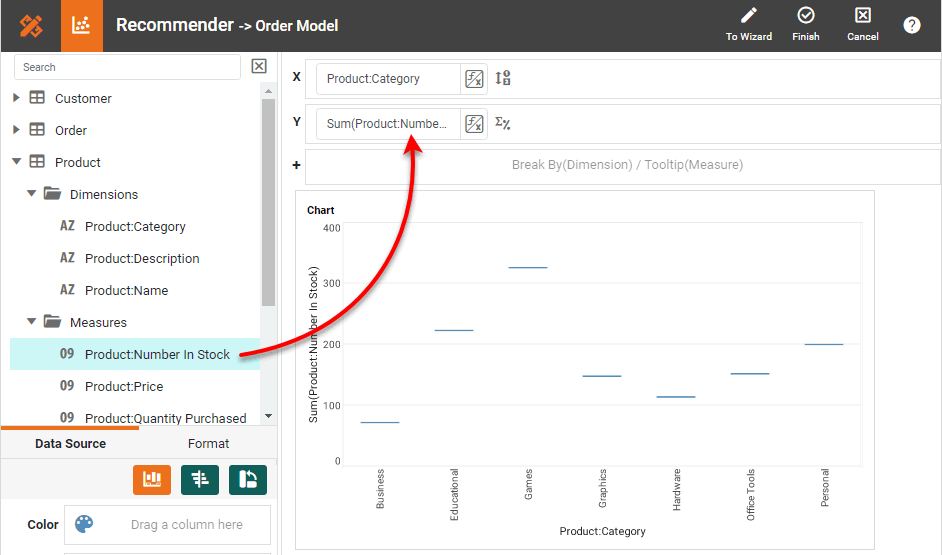
To convert a dimension to a measure, right-click the dimension in the data source and select ‘Convert to Measure’. -
Press the ‘Edit Measure’ button
 next to the measure, and select the desired aggregation method for the measure.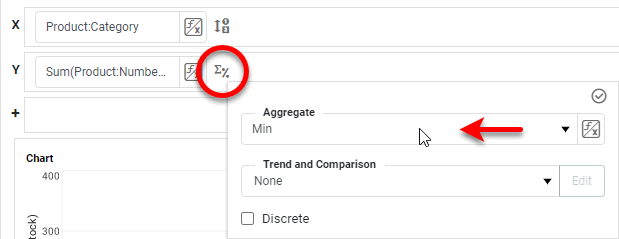
-
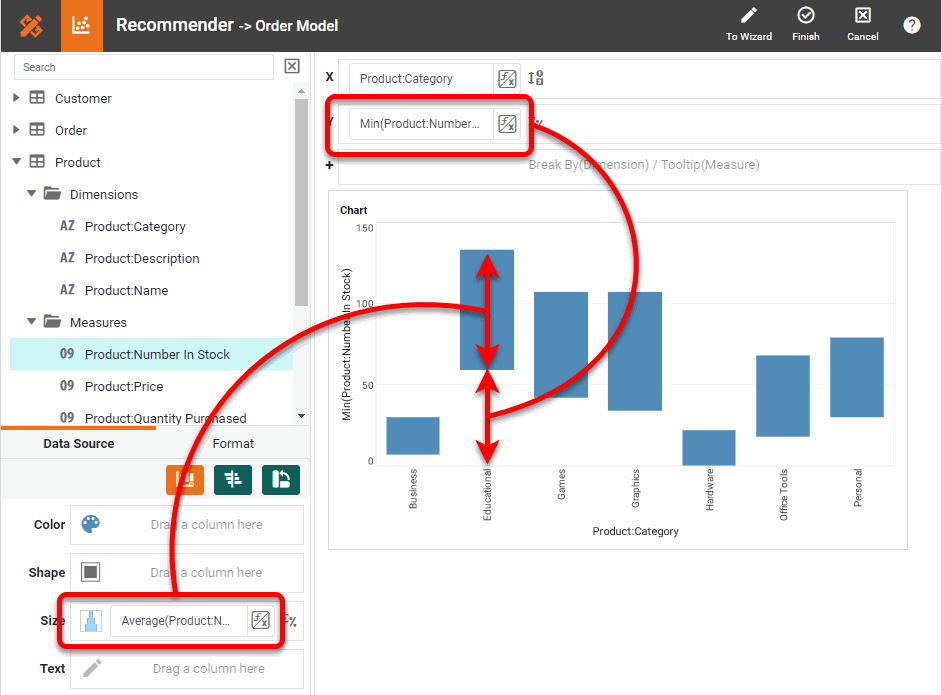
From the ‘Measures’ folder of the Data Source panel, drag a second measure to the ‘Size’ region. This measure defines the height of each bar/interval on the chart.
As shown in the example, the second measure can be the same as the first measure, but with a different aggregation method. 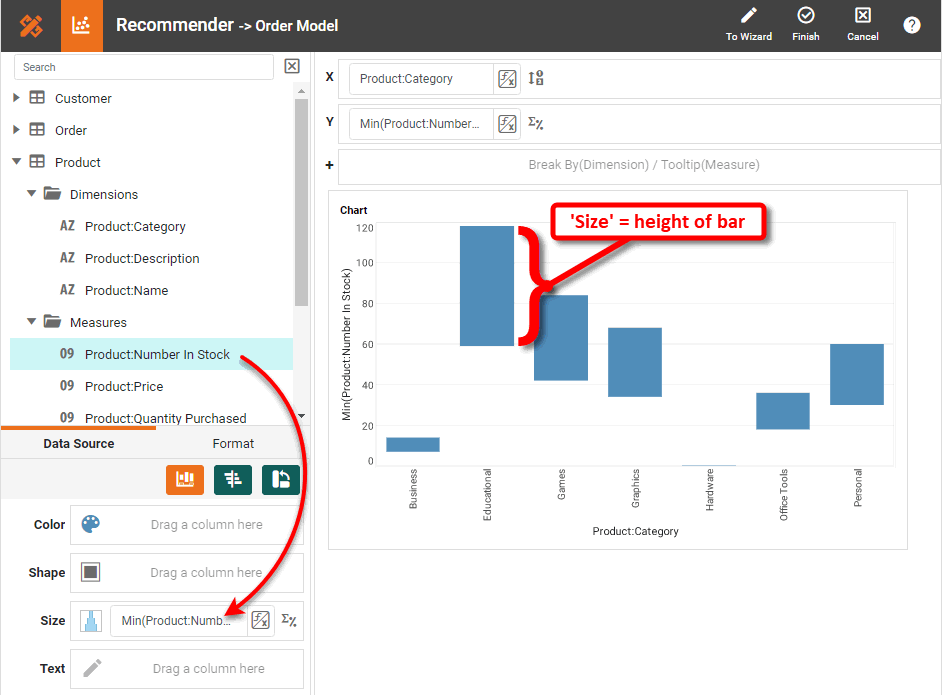
-
Press the ‘Edit Measure’ button
next to the ‘Size’ measure, and select the desired aggregation method for the measure.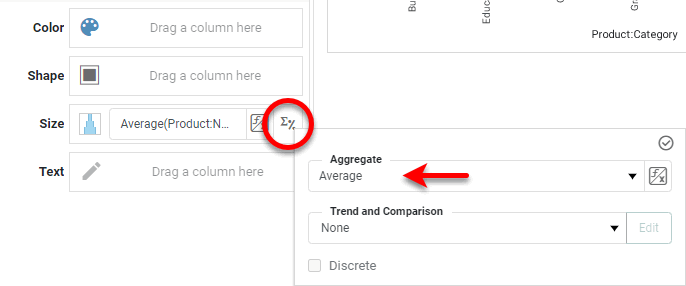
The lower value of each bar is specified by the aggregate ‘Y’ measure, and its height (vertical span) is specified by the aggregate ‘Size’ measure.
-
You can add additional measures to the Chart if desired. See Basic Charting Steps for information on how to add measures using color, shape, or size representation.
-
Press the ‘Finish’ button
to close the Editor.
You can proceed to edit the titles, legend, etc. See Basic Charting Steps and Chart Properties for more information. See Add Data Format for information on how to format text on a Chart.