SAP Query
To create a new data set from an existing SAP connection, follow the steps below:
-
If you have not yet configured the database connection, see SAP. Then proceed with the steps below.
If you see the ‘Create Visualization’ dialog box, press the ‘Close’ button
 to continue with the steps below (recommended).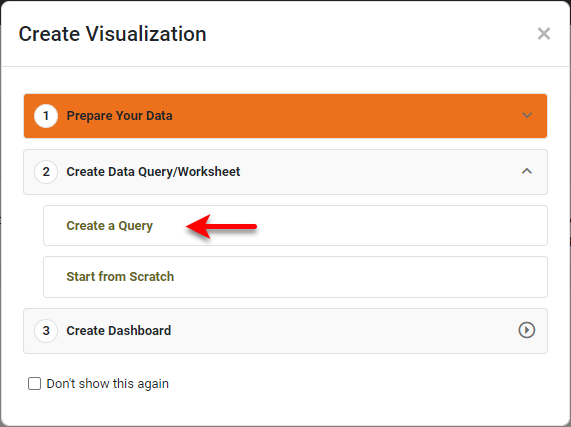
You can also press Create a Query to open the ‘New Data Worksheet’ dialog box, where you can select the query you wish to create. This allows you to skip the ‘Add’ button
 and proceed to the next steps.
 -
Open the Data Worksheet that will contain the data. (See Create a Data Worksheet or Edit a Data Worksheet.)
-
Press the ‘Add’ button
, and select ‘SAP Query’  appropriate for the data connection you previously created, either ‘SAP ABAP Query’, ‘SAP BAPI Query’, or ‘SAP Table Query’. This opens the ‘SAP Query’ dialog box.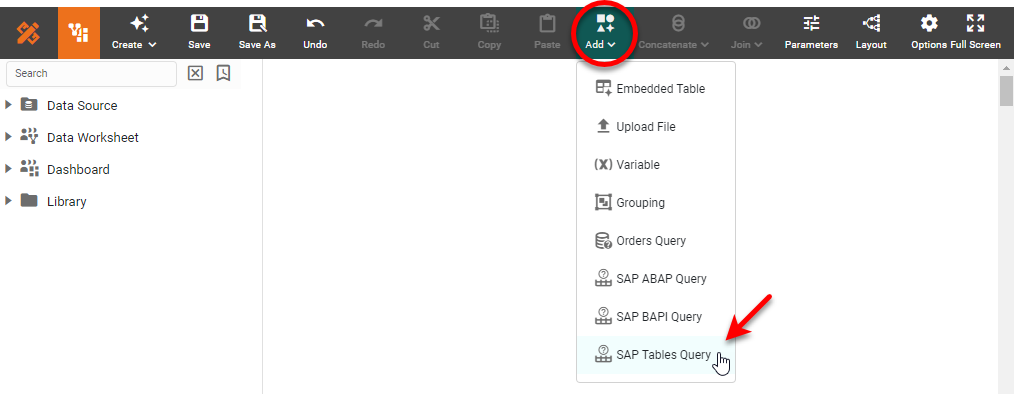
-
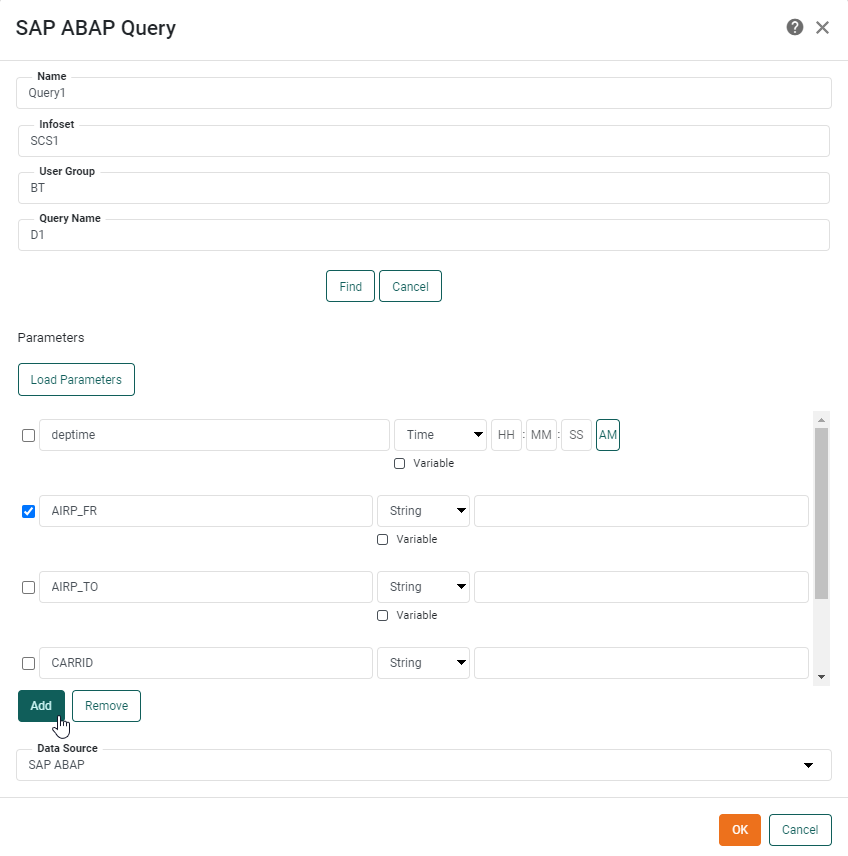
For an SAP ABAP connection, follow the steps below:
-
Select the desired ‘Infoset’ and ‘User Group’.
-
Press the Find button. This populates the ‘Query Name’ menu.
-
Select the desired query in the ‘Query Name’ menu.
-
Press the Load Parameters button. To supply a value for a parameter, check the corresponding box and enter a parameter value.
-
Optional: To add additional parameters, press the Add button. To remove a parameter, check the corresponding box and press the Remove button.
-
-
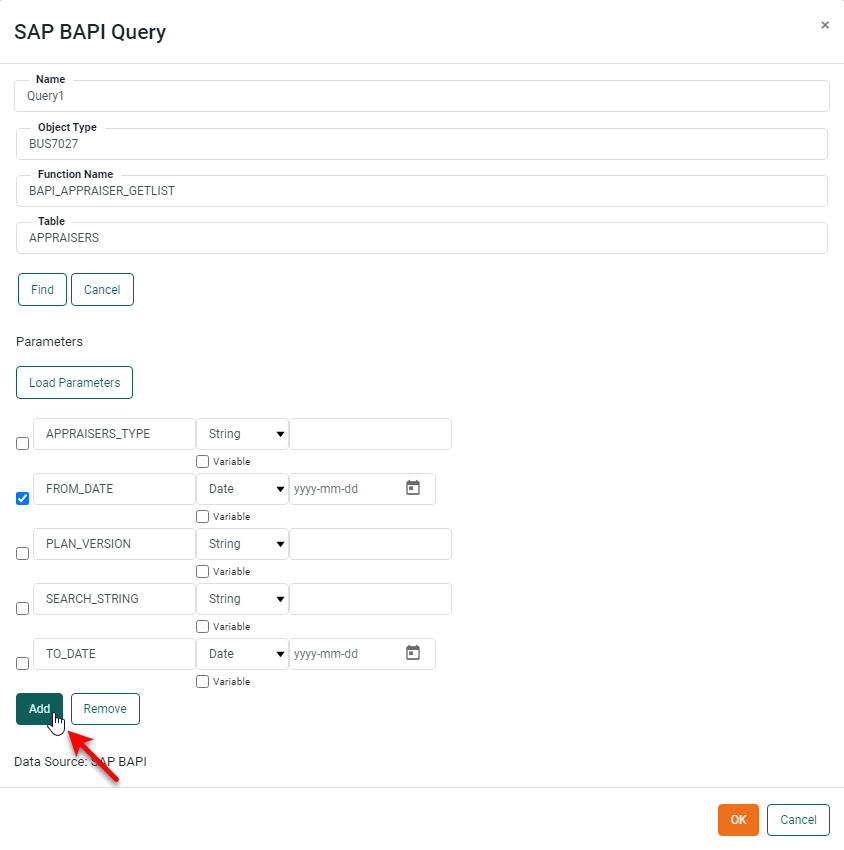
For an SAP BAPI connection, follow the steps below:
-
Press the Find button. This populates the ‘Object Type’ menu.
-
Select the desired ‘Object Type’.
-
Press the Find button. This populates the ‘Function Name’ menu.
-
Select the desired function in the ‘Function Name’ menu.
-
Press the Find button. This populates the ‘Table’ menu.
-
Select the desired table in the ‘Table’ menu.
-
Press the Load Parameters button. To supply a value for a parameter, check the corresponding box and enter a parameter value.
-
Optional: To add additional parameters, press the Add button. To remove a parameter, check the corresponding box and press the Remove button.
-
-
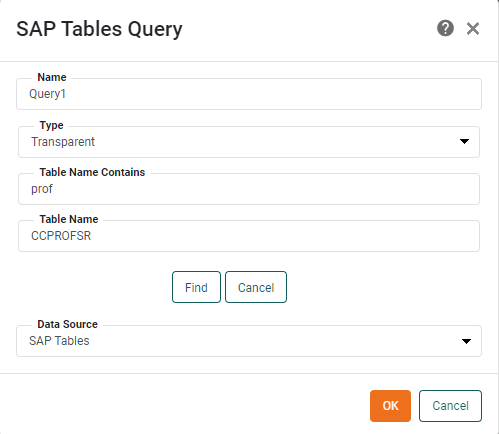
For an SAP Tables connection, follow the steps below:
-
Select the desired ‘Type’.
-
Optional: In the ‘Table Name Contains’ field, enter a table name or name fragment to restrict the tables displayed to those that match the entered text.
-
Press the Find button. This populates the ‘Table Name’ menu.
This may take a few minutes. -
Select the desired table in the ‘Table Name’ menu.
-
-
Press OK. This creates a new data block in the Data Worksheet.
-
Optional: Right-click on the data block, and select ‘Properties’ from the context menu. Note: You can also access menu options from the ‘More’ button (
 ) in the mini-toolbar. This opens the ‘Table Properties’ panel. In the ‘Name’ field, enter a name for the data block, and press ‘OK’. (See Modify a Column for information about how to rename columns.
Names must be unique without respect to case (e.g., "num1" is the same name as "Num1"). -
Press the ‘Save’ button
 in the toolbar to save the Data Worksheet.
You can now do pipeline operations on this data, as described in Prepare Your Data, or you can proceed to create Dashboards based on this Data Worksheet. See Visualize Your Data for information about how to construct a Dashboard.